Friday, March 23, 2012

Hilary Duff tweets about birth of baby boy

Jason Merritt / Getty Images

Hilary Duff and husband Mike Comrie have welcomed their first child into the world.

By Randee Dawn

Hilary Duff is tweeting about her new baby boy, Luca Cruz Comrie.

"Welcome to the world Luca Cruz Comrie!" the former child actress wrote. "Tuesday evening, we became proud parents of a healthy 7 pound 6 ounce beautiful boy."

Duff and husband Mike Comrie, a retired professional hockey player, have been married since 2010. This is their first child.

"We are overjoyed and feel like the luckiest parents in the world," Duff tweeted later. She added, "He is surrounded by so much love!! Mom and baby are both doing extremely well."

Related content:

?

Source: http://todayentertainment.today.msnbc.msn.com/_news/2012/03/22/10816216-hilary-duff-tweets-about-the-birth-of-her-first-child

mexico city earthquake donald driver donald driver dwts stand your ground law dancing with the stars season 14 bethenny frankel

Whitney Houston Cause of Death: Heart Attack, Cocaine


The Los Angeles County Coroner has released the official cause of death for Whitney Houston.

According to the report, the singer passed away due to an "accidental drowning" that was related to heart disease and also the presence of cocaine in her system.

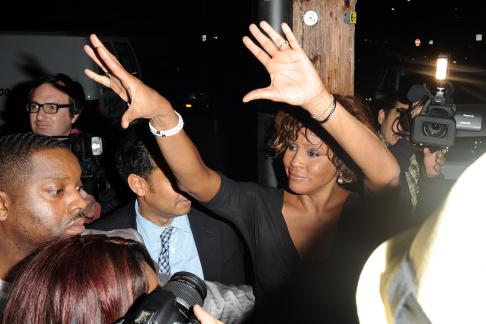
A Final Image of Whitney Houston

An insider tells TMZ that it's "very possible" the heart attack caused Whitney to pass out and fall under the water. It's also likely this was triggered by the use of cocaine. It should be noted, however, that no cocaine was found in the hotel room where Houston passed away.

Law enforcement officials have said from the beginning that no foul play was involved in the tragedy and nothing in this report suggests anything different.

Perhaps now folks such as Nancy Grace can let Whitney rest in peace.

Source: http://www.thehollywoodgossip.com/2012/03/whitney-houston-cause-of-death-heart-attack-cocaine/

g8 summit kirk cameron netanyahu aipac vanessa minnillo lenny dykstra super tuesday

Listening: The Most Under-Utilized Skill in Negotiation ? The Claims ...

?

Negotiators need to listen more

As a mediator, I rank listening as the most under-used skill in the negotiations that play out in front of me.

If lawyers had training in psychology or neuroscience, listening would be more valued and more utilized.? Most books about this have been published since I graduated from law school.? The problem is that lawyers are taught that persuasion is about their talking, their arguments, their scoring points, in order for their view to prevail.? In a negotiation, however, persuasion is more about listening for what the other side really wants, then finding a way to give it to them at the minimum cost to you.

Malhotra and Bazerman, two Harvard Business School professors, make the distinction in Negotiation Genius, between selling and negotiating.

?Selling involves telling people about the virtues of [your case],

focusing on the strengths of your case, and trying to induce

agreement or compliance.? Effective negotiating requires this

kind of active selling, but it also entails focusing on the other

side?s interests, needs, priorities, constraints, and perspective.

Negotiation geniuses?understand this difference.? They also

understand that their ability to structure a deal that maximizes

value often hinges not on their ability to persuade, but on their

ability to listen.?

Last year I read Mark Goulston?s Just Listen.? Goulston is a psychiatrist, consultant and business coach.? He is an apostle for listening.? The inscription in his book is to his mentor and friend, the business guru Warren Bennis.? Goulston says Bennis

?. . . taught me that when you ?deeply listen? and get where people are coming

from, and then care about them when you?re there, they?re more likely to

let you take them where you want them to go.?

It?s such a simple notion, yet it?s rarely used in mediations.? Practice careful and intentional listening with your loved ones (and notice their response!), then try it at your next negotiation.? Let me know how it goes.

?

Related posts:

  1. Negotiation Strategy: Going to the Balcony
  2. Getting More in Your Negotiations
  3. Don?t Go Into Mediation Cold: Settlement Requires A Game Plan
  4. 5 Things To Avoid When Negotiating In Business and Claims

Source: http://theclaimsspot.com/2012/03/22/listening-the-most-under-utilized-skill-in-negotiation/

navy seal team 6 tim gunn tim gunn built to last obama state of the union address 2012 obama speech terrell owens

Thursday, March 22, 2012

FACT CHECK: More US drilling didn't drop gas price

WASHINGTON (AP) ? It's the political cure-all for high gas prices: Drill here, drill now. But more U.S. drilling has not changed how deeply the gas pump drills into your wallet, math and history show.

A statistical analysis of 36 years of monthly, inflation-adjusted gasoline prices and U.S. domestic oil production by The Associated Press shows no statistical correlation between how much oil comes out of U.S. wells and the price at the pump.

If more domestic oil drilling worked as politicians say, you'd now be paying about $2 a gallon for gasoline. Instead, you're paying the highest prices ever for March.

Political rhetoric about the blame over gas prices and the power to change them ? whether Republican claims now or Democrats' charges four years ago ? is not supported by cold, hard figures. And that's especially true about oil drilling in the U.S. More oil production in the United States does not mean consistently lower prices at the pump.

Sometimes prices increase as American drilling ramps up. That's what has happened in the past three years. Since February 2009, U.S. oil production has increased 15 percent when seasonally adjusted. Prices in those three years went from $2.07 per gallon to $3.58. It was a case of drilling more and paying much more.

U.S. oil production is back to the same level it was in March 2003, when gas cost $2.10 per gallon when adjusted for inflation. But that's not what prices are now.

That's because oil is a global commodity and U.S. production has only a tiny influence on supply. Factors far beyond the control of a nation or a president dictate the price of gasoline.

When you put the inflation-adjusted price of gas on the same chart as U.S. oil production since 1976, the numbers sometimes go in the same direction, sometimes in opposite directions. If drilling for more oil meant lower prices, the lines on the chart would consistently go in opposite directions. A basic statistical measure of correlation found no link between the two, and outside statistical experts confirmed those calculations.

"Drill, baby, drill has nothing to do with it," said Judith Dwarkin, chief energy economist at ITG investment research. Two other energy economists said the same thing and experts in the field have been making that observation for decades.

The statistics directly contradict the title of GOP presidential candidate Newt Gingrich's 2008 book "Drill Here, Drill Now, Pay Less," as well as the campaign-trail claims from the GOP presidential candidates.

Earlier this month, GOP front-runner Mitt Romney said of his solution to higher gas prices: "I can cut through the baloney ... and just tell him, 'Mr. President, open up drilling in the Gulf, open up drilling in ANWR (the Arctic National Wildlife Refuge). Open up drilling in continental shelf, drill in North Dakota, drill in Oklahoma and Texas.'"

On Wednesday, with President Barack Obama traveling to oil and gas production fields on federal lands, Crossroads GPS, a nonprofit arm of a super PAC supporting GOP candidates, released a new ad to air in the same states that Obama was visiting. It accused Obama of restricting oil development in America and concludes "bad energy policies mean energy prices we can't afford."

The late 1980s and 1990s show exactly how domestic drilling is not related to gas prices.

Seasonally adjusted U.S. oil production dropped steadily from February 1986 until three years ago. But starting in March 1986, inflation-adjusted gas prices fell below the $2-a-gallon mark and stayed there for most of the rest of the 1980s and 1990s. Production between 1986 and 1999 dropped by nearly one-third. If the drill-now theory were correct, prices should have soared. Instead they went down by nearly a dollar.

The AP analysis used Energy Department figures for regular unleaded gas prices adjusted for inflation to 2012 dollars, oil production and oil demand. The figures go back to January 1976, the earliest the Energy Department keeps figures on unleaded gas prices. Phil Hanser, an economist and statistician at the energy consulting firm The Brattle Group; University of South Carolina statistics professor John Grego; New York University statistics professor Edward Melnick and David Peterson, a retired Duke University statistics professor, looked at the analysis, ran their own calculations, including several complicated formulas, and came to the same conclusion.

When U.S. production goes up, the price of gas "is certainly not going down," Melnick said. "The data does not suggest that whatsoever."

The calculations "help make the point that U.S. production and demand have little to do with the price of gasoline in the U.S., and lend support to the notion that there is not a great deal we in the U.S., acting alone, can do to affect the price of gasoline," Peterson wrote in an email. He pointed out that Energy Department figures show that gas prices in the U.S. seem to rise and fall similarly to gas prices in Europe, showing that it has little to do with American drilling.

And that's the key. It's a world market, economists say.

Unlike natural gas or electricity, the United States alone does not have the power to change the supply-and-demand equation in the world oil market, said Christopher Knittel, a professor of energy economics at MIT. American oil production is about 11 percent of the world's output, so even if the U.S. were to increase its oil production by 50 percent ? that is more than drilling in the Arctic, increased public-lands and offshore drilling, and the Canadian pipeline would provide ? it would at most cut gas prices by 10 percent.

"There are not many markets where the United States can't impose its will on market outcomes," Knittel said. "This is one we can't, and it's hard for the average American to understand that and it's easy for politicians to feed off that."

If drilling activity rises around the globe for a sustained period of time, gasoline prices can fall as that new supply eventually finds its way to market, but the U.S. can't do it alone, oil analysts say.

Politicians ? especially those in the party that's not occupying the White House ? have long harped on high gas prices when expedient. Then-Sen. Barack Obama said in 2008, when he was running for president, that "here in Ohio, you're paying nearly $3.70 a gallon for gas, 2-1/2 times what it cost when George Bush took office."

But Obama, who has seen gas prices go up 73 percent since he took office, was singing a different tune last week in his weekly radio address: "The truth is: The price of gas depends on a lot of factors that are often beyond our control. Unrest in the Middle East can tighten global oil supply. Growing nations like China or India adding cars to the road increases demand. But one thing we should control is fraud and manipulation that can cause prices to spike even further."

The political party of the president doesn't seem to matter to the price at the pump either. Since 1976, the average monthly gas price, adjusted for inflation, during Democratic presidencies has been $2.25; under Republicans it's been $2.34. Obama had the steepest monthly average at $3.05 and Bill Clinton the cheapest at $1.68.

When Bush and running mate Dick Cheney campaigned in 2000, they argued that as oil executives they could get oil prices down, with Bush saying, "I would work with our friends in OPEC to convince them to open up the spigot, to increase the supply."

Yet it was during the last few months of Bush's term in 2008 that gas prices hit their highest: $4.27 when adjusted for inflation.

___

Associated Press writers Dina Cappiello and Matthew Daly in Washington and Jonathan Fahey in New York contributed to this report.

___

Online:

Documents behind the AP's analysis: http://bit.ly/GJvhL6

___

Follow Seth Borenstein at http://twitter.com/borenbears , and Jack Gillum at http://twitter.com/jackgillum

EDITOR'S NOTE _ An occasional look at political claims and how well they adhere to the facts.

Source: http://news.yahoo.com/fact-check-more-us-drilling-didnt-drop-gas-065231245.html

il postino online black friday deals college football scores arkansas razorbacks arkansas football maggie daley black friday online deals

Stanford blames Ponzi conviction on Twitter

Allen Stanford, the financier convicted of running an estimated $7 billion Ponzi scheme, has asked for a new trial, citing the media's use of Twitter in the courtroom and a lack of time to prepare his defense.

Stanford, who turns 62 on Saturday, was convicted on March 6 by a Houston federal jury on 13 of 14 counts related to what prosecutors said was the sale of bogus certificates of deposit from his Antigua-based Stanford International Bank Ltd.

In a 71-page filing with the U.S. District Court in Houston on Tuesday, Stanford's lawyer, Ali Fazel, said his client was deprived of his Sixth Amendment right to a fair trial.

Stanford cycled through more than a dozen lawyers since his June 2009 arrest and was declared indigent by the court, allowing his defense to be funded with public money.

Fazel said he lacked time to prepare given the "voluminous" amounts of material. He and colleague Robert Scardino were retained to represent Stanford in October 2010.

Fazel also said the case turned into a "media circus" that left the Houston area "saturated with publicity prejudicial to Stanford" even before the six-week trial began.

He said this was perpetuated when U.S. District Judge David Hittner let reporters send Twitter messages from the courtroom, even while the judge and lawyers were talking outside the jury's presence, and failed to instruct jurors to stay off Twitter.

"This broadcasting is likely to have reached a juror, since Twitter does not require active pursuit of information, but rather, if a friend of the juror's was following the 'Stanford trial,' the tweets might automatically show up on a juror's Twitter account," Fazel wrote.

Stanford's request for a new trial does not indicate whether such information actually reached jurors.

"It would be disruptive to the business of the court if such messages were making it to the jury," said Christine Corcos, a professor of media law at the Louisiana State University Law Center in Baton Rouge. "That's why more and more federal judges are saying reporters cannot bring in Blackberries or other devices."

Stanford was convicted of fraud, conspiracy and obstruction of a U.S. Securities and Exchange Commission investigation.

He is scheduled to be sentenced on June 14 and could spend the rest of his life in prison.

The jury also found that federal authorities should try to seize $330 million of frozen funds that Stanford stashed in 29 foreign bank accounts.

The case is U.S. v. Stanford, U.S. District Court, Southern District of Texas, No. 09-cr-00342.

Copyright 2012 Thomson Reuters. Click for restrictions.

Source: http://www.msnbc.msn.com/id/46813094/ns/business-us_business/

evan longoria wheres my refund photo of whitney houston in casket carrot top george huguely whitney houston casket photo match play championship

Samsung China Exec suggests Galaxy S III could land in April

Samsung's follow-up to the Galaxy SII is one hotly anticipated release, and amongst the swathes of design student mock-ups and plain old rumor, is the occasional word from the horses mouth. Speaking at Samsung Forum 2012 in Beijing, chief exec Kim Young-ha let slip that we'll possibly see the phone land in April, and not May as initially believed, stating "In order to increase sales of the Galaxy S3 as well as the Galaxy Note which is already very popular in China, the company is considering rescheduling the roll-out of the Galaxy S3 from May to April." So if you're impatience was making you consider alternatives, it might be worth holding out just that little bit longer.

Samsung China Exec suggests Galaxy S III could land in April originally appeared on Engadget on Wed, 21 Mar 2012 07:43:00 EDT. Please see our terms for use of feeds.

Permalink SammyHub  |  sourceMK  | Email this | Comments

Source: http://www.engadget.com/2012/03/21/samsung-china-exec-suggests-galaxy-s-iii-could-land-in-april/

taylor momsen xbox live update david blaine joan rivers gary carter dies oolong tea survivor one world

Buffett gains ground in hedge fund bet - Fortune Finance - CNN

By Carol Loomis, senior editor-at-large

Jeffrey Tarrant Ted Seides

Jeffrey Tarrant (left) and Ted Seides of Protege Partners

FORTUNE -- Results are in for 2011, the fourth year of the 10-year wager that is sometimes called, rather loosely, The Million-Dollar Buffett Bet. In this competition about investment performance, Warren Buffett is contending that an S&P 500 index fund will outscore the average return of five hedge funds of funds picked by his betting opponent, New York asset management firm Prot?g? Partners.

The standings now -- which we will reveal in a minute -- inevitably bring to mind Buffett's reaction after the bet's first year, 2008.

Both sides were clobbered in that market year from hell. But Prot?g?'s fund-of-funds picks (whose names, by the terms of the bet, have never been publicly disclosed) were down, on the average, by "only" 23.9%. Vanguard's Admiral shares, which are Buffett's entry in the bet, lost a dismal 37%.

From this way-behind position, Buffett was quoted in Fortune as saying, "I just hope that Aesop was right when he envisioned the tortoise overtaking the hare."

And that's close to what has since happened. Buffett's index-fund tortoise won the second and third years and -- you are reading it here first -- also prevailed in the fourth. Not that the 2011 winner was much of a star: Admiral shares were up only 2.08%. But the five funds of funds, on the average, were down 1.86%.

All of which leaves tortoise and hare gasping alongside each other at the end of four years -- and having absolutely nothing to cheer about. Prot?g? is still a bit ahead. But its funds of funds, on the average, are in the minus column for the period by 5.89%. Admiral shares are down 6.27%.

MORE:?Don't believe every "Buffett?buys..." headline

If we really mix metaphors and think about this contest as a baseball game, what we have here is a 0-to-0 tie after four innings, with each side doing nothing but striking out and alienating every fan watching.

The wager, however, has produced one sterling investment over the four years -- and that was made, without brilliance aforethought, by Buffett and Prot?g? themselves. A little background: The idea was to set terms that would deliver $1 million to a charity chosen by the winner. If Buffett triumphs, the money goes to Girls Inc. of Omaha; if it's Prot?g? on top, the beneficiary is Absolute Returns for Kids.

Warren Buffett

Warren Buffett

To ensure that $1 million would be there at the end of the bet, Buffett and Prot?g? each put up roughly $320,000 to buy a zero-coupon Treasury security. The total of about $640,000 was used to purchase a bond that will be worth $1 million at the bet's conclusion. This collateral is being overseen by the Long Now Foundation of San Francisco, which administers "long bets" set up by any competitors wanting to memorialize a gamble.

In a period of declining interest rates, which we certainly have had, what happens to a zero-coupon bond is that its market price races toward the maturity value -- $1 million in this case. Recently, the value of the Buffett-Prot?g? bond was about $930,000, which means that in just over four years it is up 45% from the purchase price. That doesn't match the payoff from Apple (AAPL), but it's a heck of a run during a time when the general stock market was a dog.

Both Buffett and Ted Seides, the Prot?g? partner who engineered the 10-year-bet, are well aware that the returns to be earned by the zero-coupon bond from its price today can be no better than meager for the nearly six years left in the bet. That's because the ceiling is the bond's maturity value of $1 million. The view is definitely unappealing, says Seides: "We're looking at annual returns that won't be much better than 1%."

MORE:?A star fund's mystery man

So the two sides began a few weeks ago to talk to the Long Now Foundation about its selling the zero-coupon bond and putting the proceeds into an investment that putatively could deliver the winning charity more than $1 million when the bet winds up. The first plan discussed was for half of the proceeds to be invested in Buffett's company, Berkshire Hathaway (BRKA), and the other half to be invested in a fund of funds that Prot?g? runs (and that has always been assumed to be one of the five funds of funds that Prot?g? picked for the bet). But that plan died because it would have required Long Now to become a partner in the fund and, for complex reasons arising from the securities laws, it did not meet the definition of a "qualified purchaser."

So a second plan was devised and is now going forward. It calls for the bond to be sold and the total proceeds to be invested in Berkshire Hathaway stock.

Naturally, some set of dire circumstances could make the roughly $930,000 put into Berkshire worth less than $1 million at the bet's conclusion on December 31, 2017.? So Buffett has guaranteed $1 million by giving Long Now the right at the bet's conclusion to "put" the stock to him (or his estate) in exchange for that amount. In other words, $1 million becomes the floor for the winning charity, with the Berkshire investment establishing the prospect for more.

Meanwhile, the tortoise and the hare are dealing with the good market of 2012, which so far is suggesting that one or both might show -- how radical! -- a cumulative profit when the halfway mark in the bet is reached at the end of this year.

FORTUNE senior editor-at-large Carol Loomis, who wrote this article, is a longtime friend of Warren Buffett's, a Berkshire Hathaway shareholder, and editor of his annual letter to shareholders.

Source: http://finance.fortune.cnn.com/2012/03/21/warren-buffett-hedge-fund-bet/

miami dolphins charlie and the chocolate factory ou football ryan torain ryan torain world series game 3 sign language alphabet